
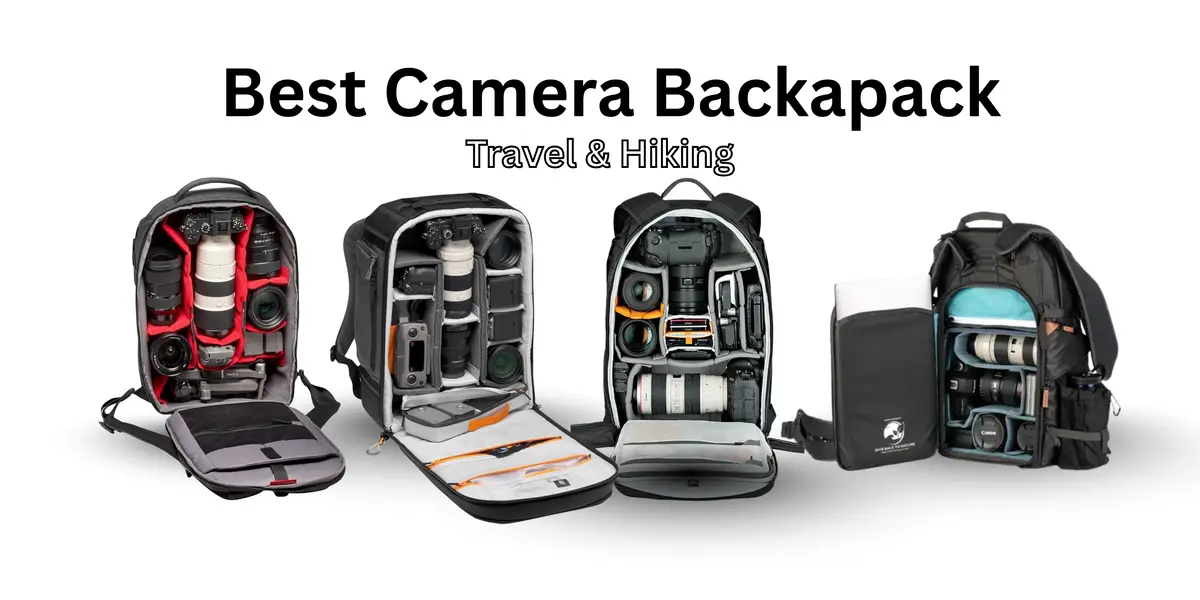
As a traveler, especially as a hacker, I used to carry my camera for photography of wild and nature. I’ve hauled heavy camera kits through mountains, airports, and city streets. Finding the best camera backpack meant weighing ruggedness against comfort, capacity against portability. In this hands-on guide I share what I discovered. Over months of real-world testing, from backpacking through alpine trails to international flights, these are the 10 top camera bags that stood out.
I looked for durable materials (weatherproof or with rain covers), clever internal organization (dividers, cubes, quick-access pockets), and ergonomic comfort (padded straps, hip belts). Experts agree you should first “consider how much camera gear you’ll bring, and what you’ll use the pack for”. We did just that: testing each bag fully loaded with DSLRs or mirrorless rigs plus lenses, and noting how easily we could reach our gear. Our reviews below include what we liked and what we’d improve.
Key Takeaways (from extensive real-world use):
The real key is understanding your shooting style:
- Travel photographers need comfort, quick access, and airport-friendly organization.
- Street and everyday shooters do better with lightweight, minimalist bags.
- Landscape and wildlife photographers need durability and weather protection.
- Hybrid creators benefit from bags with laptop sleeves and space for audio gear, drones, or gimbals.
No single backpack fits everyone, and that’s exactly why this guide helps you decide not just what to buy, but why. Each pick earned its spot through build quality, layout, protection, comfort, and value for money, so whichever option you choose, you’re getting a pack that supports your creativity rather than slowing you down.
Here we have compared all top luggages in this list.
| Backpack | Value | Capacity | Protection | Comfort | Access |
|---|---|---|---|---|---|
| Lowepro ProTactic 450 AW III | 5 | 5 | 5 | 5 | 5 |
| NOMATIC McKinnon 35L | 5 | 5 | 5 | 4 | 5 |
| Manfrotto Backloader S | 4 | 4 | 5 | 4 | 4 |
| Lowepro Pro Trekker 450 AW II | 5 | 5 | 5 | 4 | 4 |
| Shimoda Explore V2 35 | 5 | 5 | 5 | 5 | 5 |
At the end of the day, a good camera backpack should feel like an extension of your workflow, something that protects your gear, adapts to your needs, and gives you the confidence to focus entirely on the shot.
If you’re ready to upgrade your setup, any pack from this list will be a long-term investment in smoother shoots, safer equipment, and better creative freedom.
With these lessons in mind, here are our top 10 camera backpacks of 2026, each reviewed from real use. We cover capacity, comfort, build, and organization, and conclude with a balanced look at what we love and what could be improved for each.
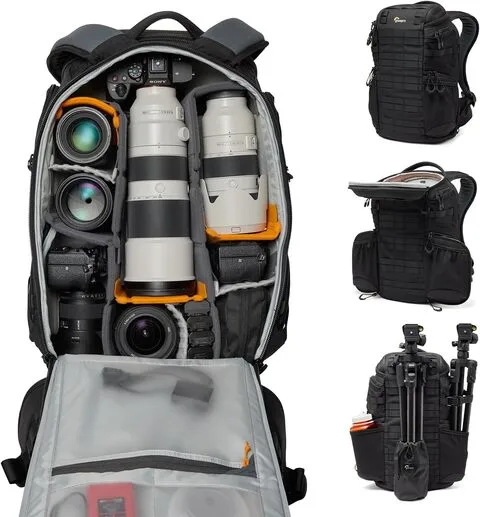
1. Lowepro ProTactic BP 450 AW III (28L)
The Lowepro ProTactic 450 AW III boasts four access points (top/front/sides) and customizable SlipLock webbing for attachments. This 28‑liter pro pack proved exceptionally versatile. Inside, padded dividers fit two bodies plus several lenses (we easily packed two DSLRs with a 70–200mm attached and extra glass).
I appreciated the camera-cube MaxFit dividers that cradle gear securely. All around, the build feels bombproof: heavy-duty recycled nylon exterior (with a rugged Cordura base) and thick padding on the harness. The SlideLock sternum strap and removable padded waist belt kept a 15 kg kit comfortable over long walks. In practice, the 450 AW III performed like a smaller daypack in feel, not excessively bulky, despite holding a hefty load.
What We Like: Easy access from top, sides, front and back, no fumbling for gear. The 16″ laptop sleeve (inside a quick-access top compartment) is handy, and the padded back/shoulder system is surprisingly comfortable for heavy loads. The pack comes with an all-weather rain cover (though it’s stored separately).
What Could Be Better: At full load this pack is heavy, and its 4‑point harness can feel a bit warm.
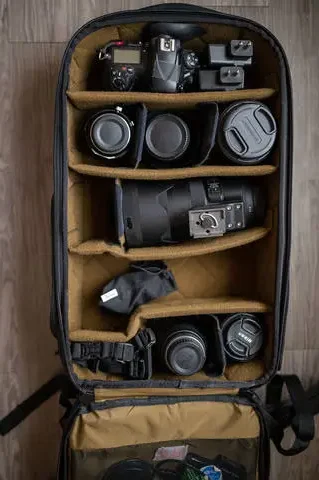
2. NOMATIC McKinnon Camera Pack (35L)
This 35-liter pack (expandable to about 42 L) feels like a camera bag fused with a travel bag. I loaded it with two mirrorless bodies, four lenses, a drone with batteries, plus clothes up front. Heavy, yes, but the padding and hip belt kept it comfortable even at 15 kg. The water-resistant tarpaulin shell is rugged, though it picks up fine scratches.
The rear camera compartment is generous; our two-camera setup used only a quarter of the space. The front section holds about two days of clothes when expanded, but overfilling can throw off balance and press into the main compartment. A padded sleeve fits a 16″ laptop, and you get handy touches like a bottle pocket that doubles as a tripod holder and a side USB pass-through.
If you carry a full kit (cameras, drone, clothes), the McKinnon 35L becomes a compact mobile studio. It’s likely overkill for casual shooters, but for traveling creators, it nails that gear-plus-travel sweet spot.
What We Like: Exceptional durability, the rugged fabric and metal zippers ate up abuse. Massive capacity made it our go-to for multi-day trips. The harness (thick back panel and hip belt) actually absorbed much of the load weight.
What Could Be Better: It’s huge and overkill for casual outings, not every photographer needs this much space. On regular hikes it felt bulky, and at 2.6 kg empty it is on the heavier side.
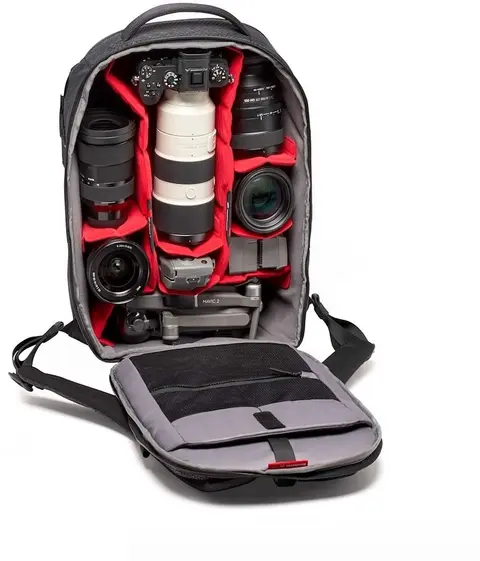
3. Manfrotto PRO Light Backloader S (30L)
The Pro Light Backloader S is a compact ~30 L rear-access camera pack designed entirely around photo gear. It easily fit two bodies and multiple lenses, with virtually no space dedicated to anything else. The ripstop nylon shell, Duraflex hardware, and built-in rain cover keep it lightweight yet travel-ready.
Manfrotto’s rigid M-Guard divider system stood out, the high-density EVA padding and SAS-TEC base foam held everything tight and absorbed bumps impressively well. Full-width rear access makes packing simple, while the top quick-access area fit a body with a 70-200mm attached. The front panel’s organizer pockets kept batteries and filters easy to reach.
What We Like: The high build quality stands out. Metal zipper pulls are smooth and durable, and all materials feel premium. The included rain cover deploys effortlessly (and tucks away when unused). With dual side straps for tripods and water bottles, it’s also subtly tactical-looking but not bulky.
What Could Be Better: Space for extra gear is minimal by design. There’s only a small pocket for cables or personal items. You really need a separate bag if you want to carry clothing or non-photo items.
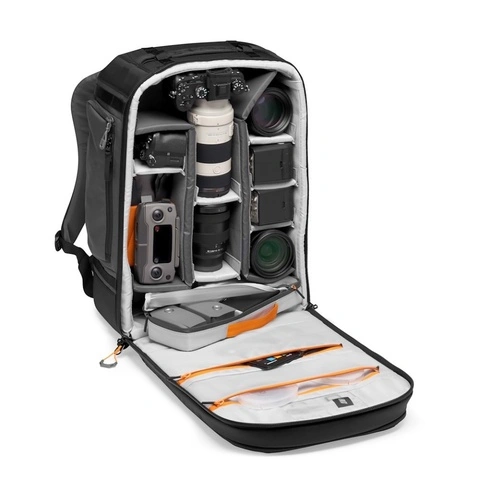
4. Lowepro Pro Trekker BP 450 AW II (32L)
This rugged outdoor camera bag is built for the long haul. In testing, we found the Pro Trekker 450 (32 L) to be very roomy: it held two full-frame cameras, several long lenses (up to 300 mm), a laptop, and accessories with room to spare. Its boxy shape maximizes volume within airline carry-on limits.
The exterior uses tough ripstop nylon with a weather-resistant Cordura base, and it includes an all-weather rain cover. a must in unpredictable environments. Shoulder straps are heavily padded and adjustable; I hiked miles with 20 kg on my back and still found it comfortable. The wide hip belt really transfers weight off the shoulders, and it detaches/removes for flying or if you need a lighter pack.
What We Like: Comfort and capacity. We loved the level of padding, even on day-long hikes it never chafed or dug in. The pack also has two sturdy grab-handles (top and side) for hauling it out of tight spaces. It’s “mighty fine” quality as B&H wrote. The Pro Trekker is exactly what it sounds like: a camera bag built for trekking.
What Could Be Better: It is big and heavy, even empty. At ~4 kg loaded, it’s no runner’s pack, mostly for dedicated photo trips.

5. NOMATIC Luma Camera Pack 18L
This slim 18‑liter pack (Peter McKinnon collaboration) targets mirrorless shooters and everyday travel. In the field it impressed us with its clever space and quick-access features. The Luma’s three entry points (top, side, and back) make grabbing a camera on the fly effortless. I found the side zipper especially handy: it swings the pack around to the front for a quick shot without fully opening everything. Built from 900D coated polyester with waterproof zippers, it handled rain fine. Despite its small size, we fit two mirrorless bodies, two lenses and still had room for a small drone or accessories. The padded internal dividers are well-made and fully adjustable (even removable).
Several design details stood out. An external tripod strap (shock-cord style) and an integrated tripod/ bottle pocket on the side gave extra carrying options. The back has a padded 16″ laptop sleeve, although it’s a snug fit, a 15.6″ slim laptop just squeezed in.
What We Like: Efficiency and style. The bag is lightweight (only ~1.2 kg) yet well-padded in key areas. The fabric and YKK zippers feel durable. It has plenty of pockets: a zippered front stash, side water bottle slot, and quick top shelf for a small tablet or phone.
What Could Be Better: The laptop compartment, while nice in a small bag, is a bit short on protection, users might prefer extra lining or a removable sleeve.

6. Shimoda Explore V2 35 (35L)
Shimoda’s Explore V2 35 is built for serious adventure travel. At 35 L, it easily carried two bodies, 5-6 lenses, a laptop, water, and a tripod in our tests. The 210D/420D coated ripstop nylon shell is extremely tough, after weeks of rain and mud, it still looked almost new. With the included rainfly, the pack was effectively waterproof.
A full-length internal metal frame adds structure and impact protection, and the adjustable harness (with torso-height settings and solid hip belt) handled heavy loads well. We only found the sternum strap a bit small for the pack’s size.
Storage is smartly executed. Oversized hybrid side pockets secure either a water bottle or tripod, and the main compartment opens from the rear or through a quick-access side zip. The side entry let us grab a camera or lens in one motion while shooting. Shimoda’s modular Core Units fit inside, but even the default dividers kept everything stable and organized.
What We Like: Exceptional durability and organization. Tons of pockets inside and out (internal memory card slots, passport pocket, mesh pouches, etc.). In our 2-week use, nothing tore or failed. balances adventure-ready toughness with camera-specific organization. We’d call it the best camera backpack for hiking and travel on our list.
What Could Be Better: It is very bulky for only 35L.
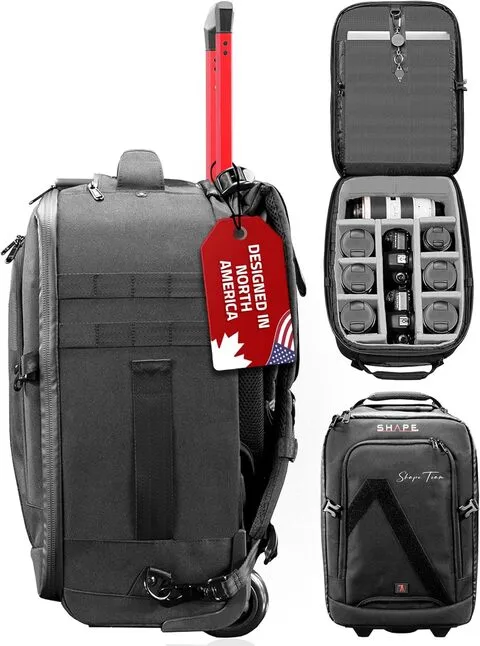
7. SHAPE Rolling Camera Backpack: 2-in-1 Travel Bag
The SHAPE Rolling Backpack is unique: it’s both a wheeled carry-on and a backpack. From airports to uneven trails, it adapts. When rolling, it meets carry-on dimensions and glides behind you on robust wheels (two-stage aluminum handle). When terrain gets rough, padded straps deploy and let you carry it like a backpack. Weighing ~6.35 kg empty, it’s much heavier than other packs, but that armor-like shell and trolley frame demand it.
Inside, it has a removable padded camera cube insert (one-step pull-out) that kept our gear protected. This meant we could quickly grab the whole inner bag and use it separately if needed. The dividers are customizable, so we fitted our DSLR and prime lenses with ease. A full-panel zip opens the front pocket for accessories, and several clear organizer slots let us see batteries and filters at a glance. On both sides, zippered mesh pockets held a water bottle and a tripod leg. We also liked the MOLLE-style front panel: it accepted SHAPE’s own “on-set belts” or small pouches for extra tools.
What We Like: Versatility for travel. This bag is a camera suitcase with backpack straps. For frequent flyers or crews lugging kit through airports, it’s a godsend, you get wheels plus backpack function. We’d recommend it as the best choice when “rolling” is needed. Keep in mind it’s not the lightest option, but if you value the convenience of wheels, this SHAPE bag hits the mark..
What Could Be Better: As it’s fairly new on the market, we couldn’t test very long-term durability. A minor point: attaching tripods requires using a drop-down pocket or straps, which takes time to set up.
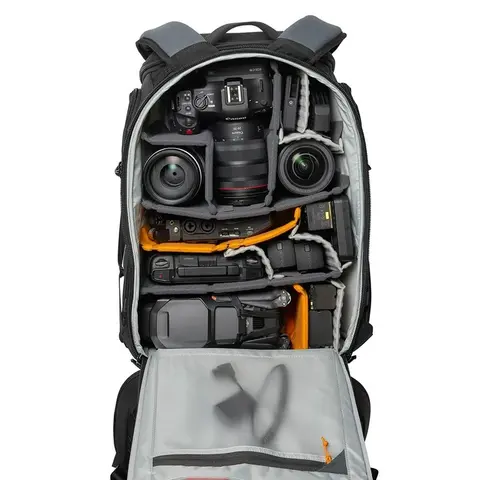
8. Lowepro ProTactic 450 AW II (28L)
An earlier version of Lowepro’s tactical pack, the 450 AW II shares many strengths with the III. We tested it to compare. It’s the same 28 L capacity, same four-way access and SlipLock system. One difference: the AW II uses the older CradleFit divider system. In practice, we packed it the same way and found it equally roomy. It accommodated our DSLR bodies and lenses just fine. The main rear-entry panel gives full camera access, and the top panel has room for one camera with a medium zoom (I often kept a Blackmagic 4K or a 70–200 in it). Zippers have large pull loops, a small but welcome touch in cold or wet conditions.
The AW II is also robust, with high-grade nylon and Cordura. We found the built-in zip-out rain cover worked well in storms. Comfort-wise, the molded back panel and straps are padded, though we noticed one quirk: when the padded laptop sleeve is filled, it flattens out the back padding. My slim 15.6″ laptop fit, but it did make the back feel hard against me after a while. The AW II’s harness and load-lifter straps did carry the weight acceptably, but just not quite as refined as the newer version’s SlideCam strap.
What We Like: Its gear-centric design. The AW II comes with two removable accessory pouches and a tripod pouch, similar to the AW III. We’d place its performance almost on par with the newer AW III, with a few small exceptions. For someone who finds the AW III too new or pricey, the AW II is a great alternative with most of the same benefits.
What Could Be Better: The same issue as the AW III: the laptop pocket disrupts the back padding when in use, compared to newer packs, the waist belt is also thick and less ergonomic
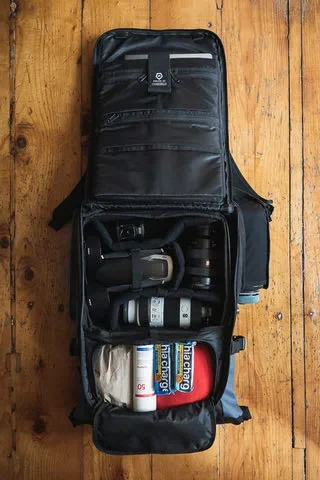
9. WANDRD PRVKE 31L V3
The WANDRD PRVKE 31L V3 is an expandable roll-top camera/travel backpack with clamshell and side access. It’s comfortable and intuitive: everything has its place. WANDRD’s PRVKE series is famed among travel shooters, and the 2026 version continues that legacy. The 31 L main body plus a +5 L roll-top gave us remarkable flexibility. In practice, I often climbed a mountain with it stuffed to 36 L, the roll-top let me carry bulky layers or souvenirs on the fly. The bag’s tarpaulin and ballistic nylon shell felt very tough and water-resistant (the company claims and we confirmed it is “more or less waterproof”). Dual YKK zippers (weather-sealed) add confidence in rain.
Inside, the PRVKE is highly organized. We used the standard divider (velcro separator) to split top vs. bottom; one tester used a Peak Design cube inside for more padding. A rear clamshell opening exposes a divided back section: it has dedicated sleeves for laptop and tablet and four internal stash pockets. Unpacking was a breeze thanks to this design, it truly “makes packing a doddle”. Additionally, a side zipper in the lower half lets you reach an accessory or camera without unfolding the whole pack. This meant in city use I could swing it around, zip open the side, and grab a lens in two seconds, no fumbling required.
What We Like: The PRVKE’s versatility and smart layout. No wasted space: from hidden pockets to the expandable top, “we literally use every feature of this bag”. It’s equally at home on a weekend city trip or a mountain hike. The exterior pockets (wide front zip) fit maps or books, and compression straps let you cinch it down if not fully loaded.
What Could Be Better: It’s a luxury pack with a luxury price. Some may balk at the cost compared to lesser bags.
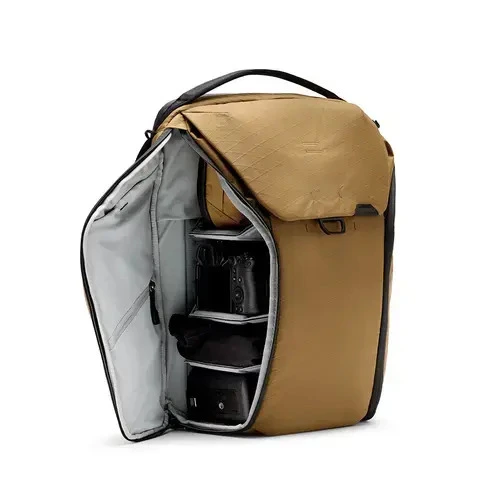
10: Peak Design Everyday Backpack, 30L
I tested the Peak Design Everyday Backpack 30L on a busy city photo walk and a short overnight trip. I packed a mirrorless body with a 24-70, a second body with a 35mm, two extra lenses, a drone controller, and a 15-16″ laptop in the rear sleeve. The bag handled the load without the kit shifting, and I loved how quickly I could get a camera out via the top MagLatch or one of the side zips, perfect for street work and quick travel transitions. The FlexFold divider system kept small items secure and doubled as a lightweight organizational solution when I swapped camera gear for personal items on the trip. Materials felt premium and weather-resistant in light rain.
What we like: MagLatch top access plus dual weatherproof side zippers let you grab a camera or lens without full unpacking. Configurable FlexFold dividers protect gear yet convert quickly for non-camera use (clothes, snacks, etc.). Dedicated laptop sleeve, external carry options, and a durable, water-resistant shell make it solid for international travel and daily shoots.
What could be better: No hip-belt support and somewhat rigid shoulder straps, comfortable for urban use and short trips, but less ideal for long alpine hikes with heavier loads
Conclusion
Choosing the right camera backpack isn’t just about storage, it’s about how confidently, comfortably, and efficiently you can move as a creator. Every photographer works differently, and that’s why this list covers a full spectrum of options: from rugged adventure-ready packs like the Lowepro ProTactic 450 AW II, to sleek urban choices like the Moment MTW Backpack, to budget-friendly essentials for beginners.